
Do you feel like you are using too much air underwater? Are you cutting your diving times short because your tanks are always empty too soon?
In this guide, you will learn how to use less air while scuba diving and enjoy longer dives immediately.
The first step to using less air while scuba diving
The first step to conserving air on a dive is: Don’t stress!
It is important to remember:
Don’t stress! Diving is fun!
The worst you can do is stress about your air consumption.
Not everything can be fixed and let’s face it: If you are 2,10m and weigh 125kg, you WILL use more than someone who is only 1,70m and 60kg.
So don’t stress, and see it as a fun and rewarding challenge, instead.
This guide will give you lots of practical tips and exercises, and if you follow them, you will notice a difference.
Why should you conserve air during a dive?
There are many reasons why conserving air during a dive is great:
Longer dive times
The less air you use, the longer you can dive. You will have more time underwater to explore, and each dive will be more fun this way.
Less stress
Being low on air is stressful. Not just when you hit the safety reserve, but all the time getting there, as well. Especially when you are diving in a group, knowing you are the person with the least amount of air can be annoying and create unnecessary pressure.
You save money
Saving air means saving money.
A common fix for making a dive longer is to buy or rent a bigger tank. This is especially true on dive vacations when you have paid a good amount of money for each dive.
Once you learn how to actively conserve air, you might not need to get a bigger tank, thus saving money.
It’s an essential skill
Effective air management is an essential skill for any scuba diver and is important to master.
How to conserve air before a dive
Conserving air starts at the surface before the dive has started. Here are my personal tips and recommendations:
Ensure your tank is full
Check the tank pressure before each dive. If it is below 180 bars in a 200-bar tank, get it filled up.
Take care of your equipment
Handling your dive equipment with care and ease is important and will help you use less air. Ensure there are no leakages at the valves which is a common reason for air loss.
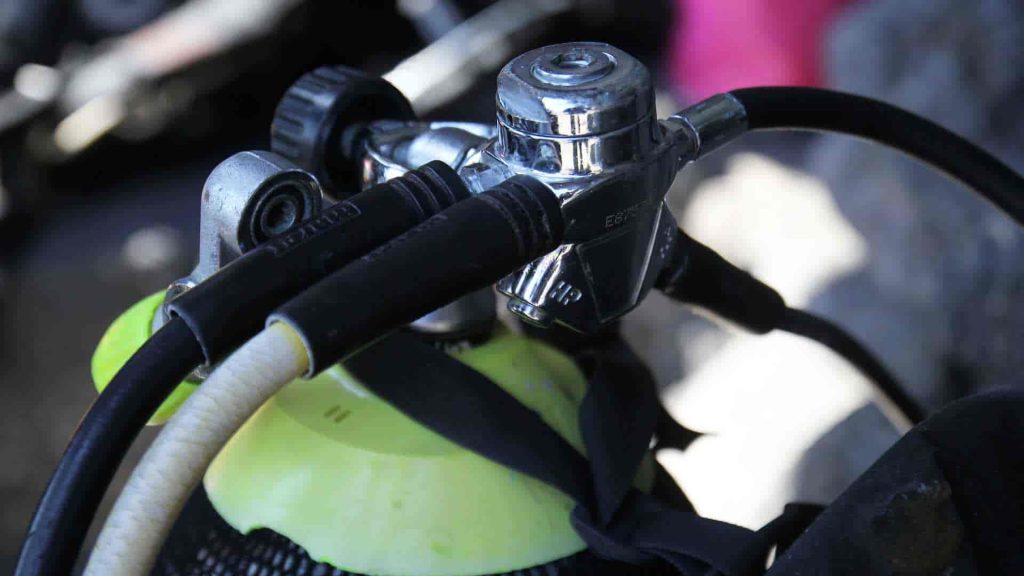
Don’t accidentally get your BCD inflator button stuck or entangle your drysuit valve, either.
Don’t accidentally activate the purge button
Keep your regulator close to your body and don’t drop it carelessly on the floor or into the water. This can lead to damage and leaking, or activate the purge button on the second stage of the regulator.
The air will start free-flowing which can be super wasteful.
Bring the right amount of weights
Many divers use way too many weight pieces during a dive, meaning they have to inflate their BCD to the absolute maximum, just to float at the surface before the dive.
Doing so also creates unnecessary drag underwater which leads to heavier breathing and subsequently higher air consumption.
If you notice you have to kick in the water to stay afloat, do a proper weight check and drop as much weight, as possible.
The less is more. You want to take the smallest amount of weight pieces possible so you can descend and stay underwater with ease.
Use our fabulous scuba diving weight calculator to calculate how much you need in advance!
Only bring what you absolutely need
Diving often follows the rule “less is more”. More equipment means higher air consumption so keep it light and minimal.
How to conserve air during a dive
During a dive, good diving technique is essential to conserve air.
Properly inflate your BCD
Many beginners dive in a “deflated” state, meaning they don’t put enough air into their BCD and instead kick their fins rapidly to stay afloat.
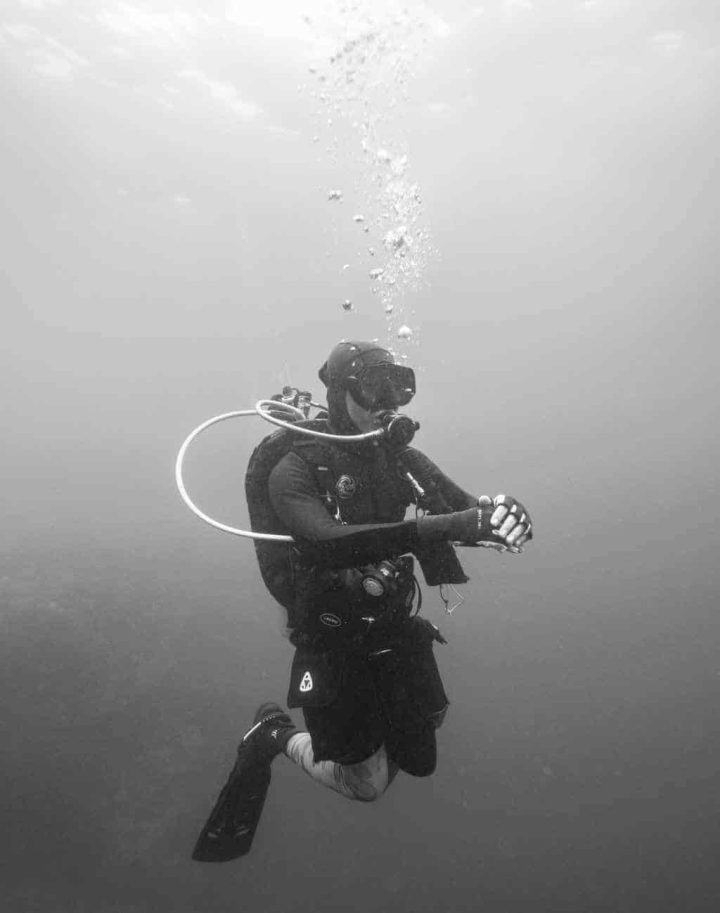
An easy fix is to always inflate the BCD a bit more when descending.
Breathe normally
Try to have the same regular breathing rhythm as above water while scuba diving.
Avoid excessive in- and exhaling and remember the tip about properly inflating your BCD.
Choose a good fin kick
Kicking your fins uses up a lot of air if done improperly.
The best fin kicking technique is the frog kick which also conserves air while diving.
More tips to use less air while scuba diving
Stay fit
Exercise regularly to keep yourself in shape. Regular cardio training will have a positive impact on air consumption during your dives.
Here you can read more on diving and fitness.
No food right before a dive
A full stomach will make breathing underwater more difficult and increase your air consumption. It’s best to wait an hour or two before diving again.
Conclusion
Hopefully, you now have a few ideas on how to conserve air during your next dive.
It mostly comes down to proper fin and breathing technique, as well as inflating your BCD appropriately.
Preventing unnecessary air loss through excessive extra weights or leaking regulators is another great way to improve air consumption as a scuba diver.
Use the scuba diving weight calculator to get an accurate estimate of the weights you need.
If you have any other ideas, tips, or tricks, share them with us in the comments or on social media!
Join the email list to get regular diving tips, tricks, insights, and news straight to your inbox!
Always dive with friends and happy bubbles. 😃
Cheers
Julius