Sidemount diving has become increasingly popular in recent years, not just for cave or technical divers.
Wherever you go, it seems there is at least one buddy team using a sidemount configuration.
If you want to try it out, or just understand a bit better what it’s all about, keep reading!
What is Sidemount Diving?
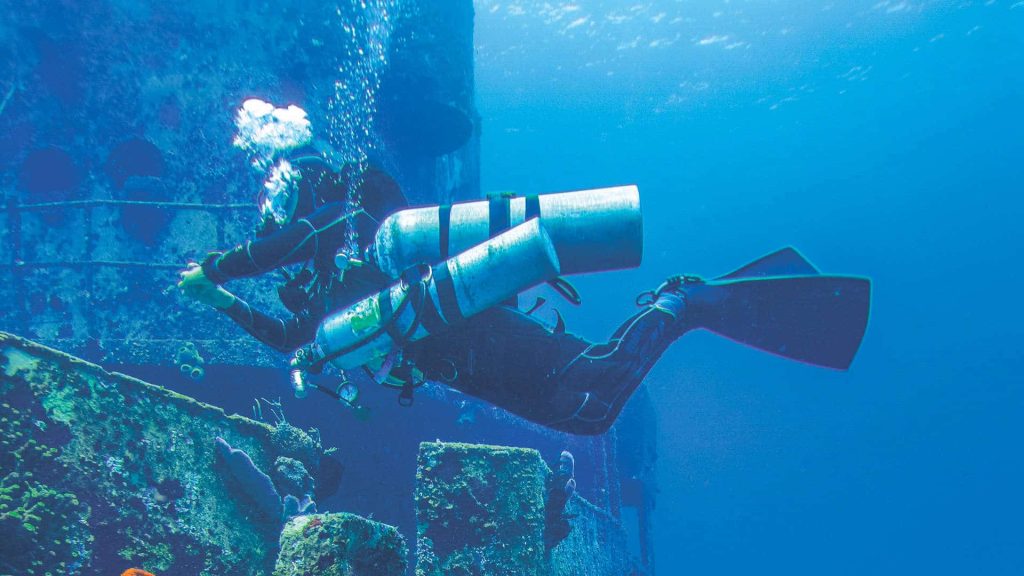
Sidemount diving is a configuration where divers carry cylinders at their sides, in contrast to the traditional back-mounted method. It initially catered to cave divers due to its flexibility and increased maneuverability but has become popular among recreational divers, as well.
Sidemount diving was developed in the cave diving community where it allowed divers to pass through narrow passages moe easily than with a fixed backmount setup. Now appeals to the broader diving community, offering unique advantages in terms of flexibility, mobility, and safety.
Divers use a special sidemount harness to which a tank can be attached to either side.
Why you should try out Sidemount diving
First off, it’s fun!
Sidemount diving gives you a new perspective on diving and feels great!
Instead of carrying heavy tanks on your back, you can simply attach them when you get in the water.
The sidemount configuration also offers a distinct set of advantages over traditional backmount diving in many situations:
Comfort: The weight distribution on the body is more balanced, reducing stress on the back, making long dives more comfortable.
Accessibility: The ease with which tanks can be attached even in the water makes sidemount diving often more convenient. This can be particularly beneficial in locations with challenging entry points where carrying a back-mounted tank is cumbersome.
Flexibility: Sidemount configuration provides enhanced maneuverability, particularly in tight spaces. This is invaluable in environments like caves or shipwrecks.
Redundancy: The independent air sources can be a lifesaver if one malfunctions, offering an additional layer of safety.
However, there are also some disadvantages:
- Extra equipment required: Unfortunately, you can’t just attach your tanks to your old BCD and call it a day. Instead, you need to buy a special sidemount harness and straps for your tanks.
- Works best with two tanks: To achieve a symmetric trim, two tanks are optimal. That also means you need to carry two tanks (and get them filled beforehand) on each dive.
- Difficulty on boats: Many liveaboard ships have limited space. Be sure to tell the operator beforehand that you plan on diving sidemount!
Use cases of Sidemount diving
Sidemount diving is not just for cave diving (though it excels at that)! Here are some use cases for sidemount setups:
- Recreational Diving: For those who prize comfort and the freedom to move, sidemount offers an unmatched experience.
- Technical Diving: Sidemount configurations are great for technical diving, and you will often find a combination of back- and sidemount tanks here.
- Photographers and Videographers: The agility and stability offered by sidemount is perfect for underwater photography, providing the ease to get into the perfect position for that great shot.
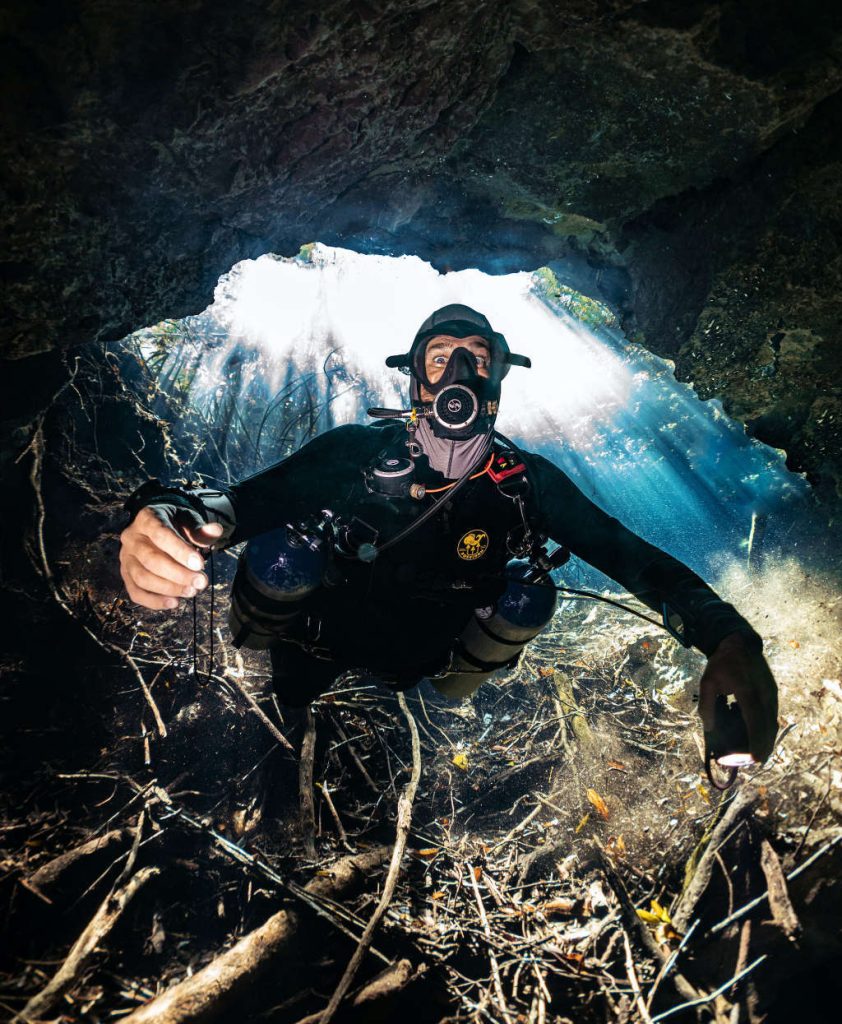
- Wreck and Cave Diving: Cave diving is where sidemount is king. Especially in the cenotes and other large cave systems, it makes moving through narrow passages far easier!
Sidemount diving equipment
The right equipment is crucial for a successful sidemount dive. You will at least need the following equipment pieces:
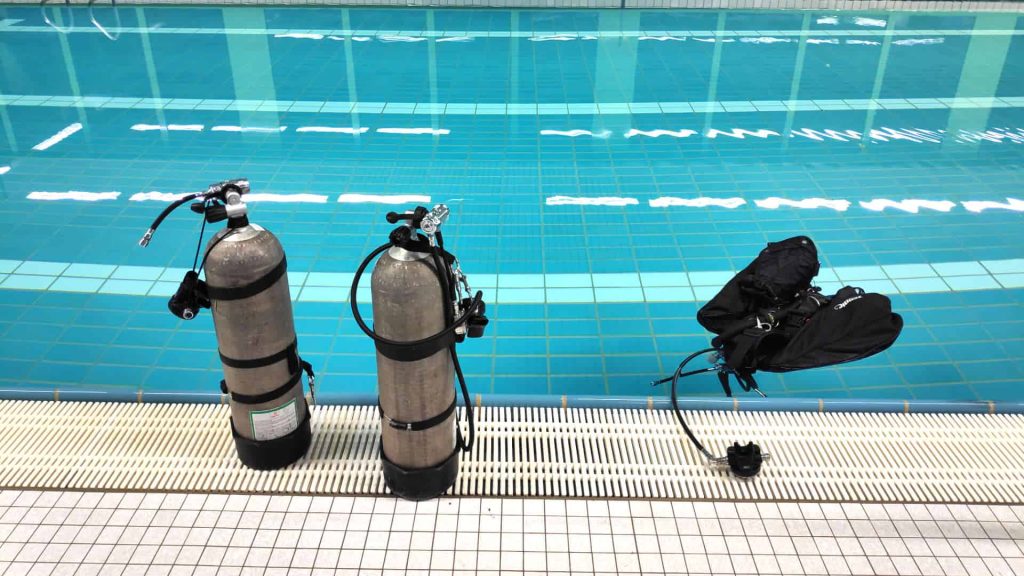
Sidemount Harness: Unlike traditional BCDs, this harness is tailored for sidemount diving, featuring multiple attachment points for equipment and weight systems.
BCD: A BCD designed for sidemount will have bladder systems tailored for the unique weight distribution and buoyancy challenges of the configuration.
Regulators: Each cylinder requires its regulator, ensuring that there’s always a backup available.
Tanks: Typically, divers use one or two smaller cylinders, but technical dives might require more.
Gauges: Each tank should have its own SPG (Submersible Pressure Gauge).
Hoses: Sidemount diving often requires longer hoses to facilitate easy swapping and sharing between regulators, especially in emergencies.
How to Get Started with Sidemount Diving
The easiest way to become a sidemount diver is by taking a training course!
Diving agencies globally, from PADI to SSI, offer specialized sidemount diving courses. These courses cover equipment setup, dive techniques, and safety procedures unique to sidemount diving.
Before you do, however, you should already have an Open Water certification or better Advanced Open Water Diver.
After that, it’s as usual: Practice makes perfect!
Conclusion
Sidemount diving is a great way of exploring caves, but not only.
If you haven’t done so yet, you should try it!