Freediving is a super exciting sport that has grown tremendously in recent years.
Instead of using scuba gear to breathe underwater or snorkeling around, we only take one single breath and explore the underwater world.
However, there is more to freediving than just jumping in the water and seeing where it leads.
In this ultimate freediving guide 2026 you will learn the basics of freediving, the equipment we use, the disciplines you can train in, and how to get started quickly.
What is Freediving?
In freediving or breath-hold diving, we only use the air in our lungs from one single breath to dive underwater until resurfacing. Divers hold their breath to dive underwater either to achieve a target depth, distance or explore the underwater world. It is also referred to as apnea, meaning the absence of breathing, and there are several athletic competitions in various areas of freediving.
Unlike snorkeling, where we use a snorkel at the surface while looking down underwater, and scuba diving, in which we utilize scuba gear to breathe underwater, freediving is a different way of exploring the depth.
You take a breath and hold it while being fully submerged in the water.
Most freedivers claim it is the purest form of diving, as it requires nothing but your own body.
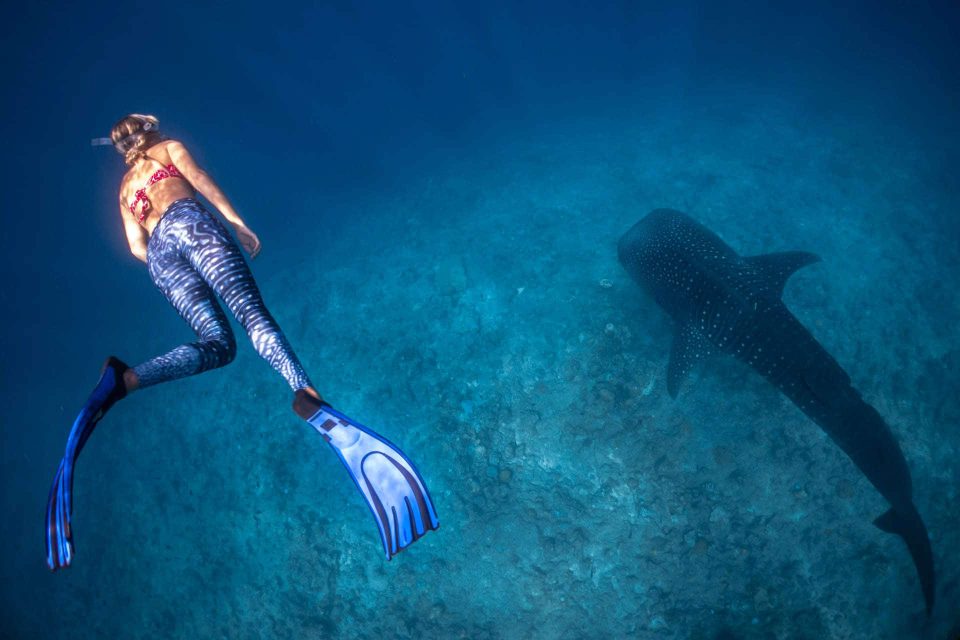
Freediving is also used a lot in spearfishing and apnea hunt. Scuba gear and the bubbles it releases is very loud for fish ears, so apnea spearfishing can help to catch more.
It’s also beneficial for doing rapid ascents and descents which would not be possible in scuba diving without risking decompression sickness.
Some people also use the term “skin diving”, however, these are two different sports entirely.
Freediving Gear Essentials
Freediving is super simple to get started with and doesn’t require very much equipment at all.
Here are the basics every freediver should have:
Freediving Mask
Freediving and scuba masks allow us to see clearly underwater. In contrast to swim goggles, they feature a nose pocket which also makes equalizing our ears much easier.
If you already own a snorkel or scuba mask, you can simply use that for your first freediving attempts, as all of them come with tempered glass lenses.
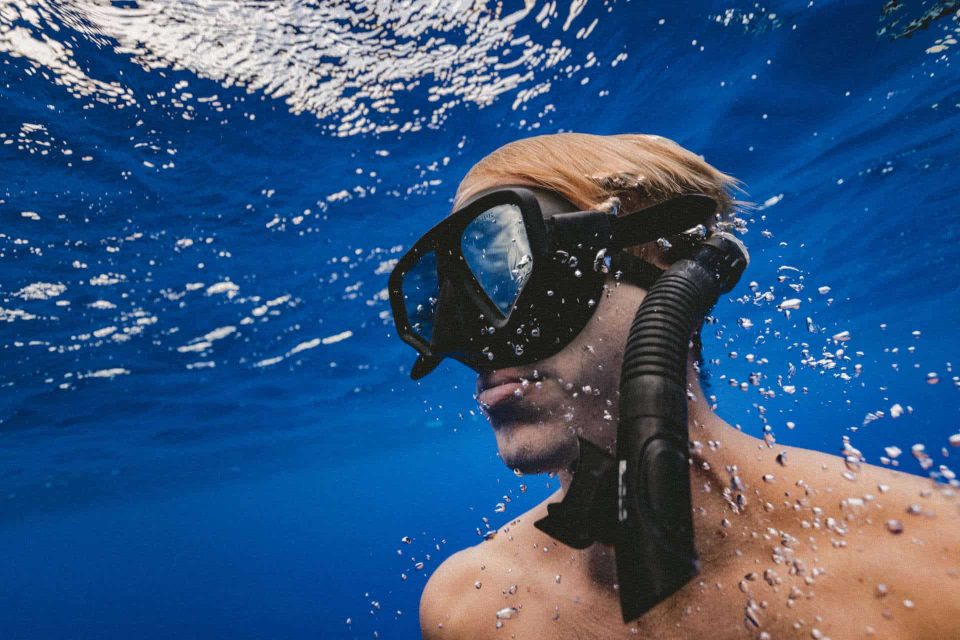
Higher-priced models can often be equipped with prescription lenses that increase your vision underwater and can be fitted to your needs.
In contrast to scuba masks, freediving masks usually come with a lower volume or profile to sit closer to your face. This means they can be cleared more easily, and have less drag, however, your field of vision is slightly decreased.
My buying guide will help you find the best scuba masks in 2026!
Freediving Fins
Freediving fins help us swim faster underwater with less effort. They have a much longer blade than scuba or snorkel fins so you can cover more distance with fewer fin kicks.
For freediving, we prefer full-foot or closed-heel designs and ditch the dive boots.
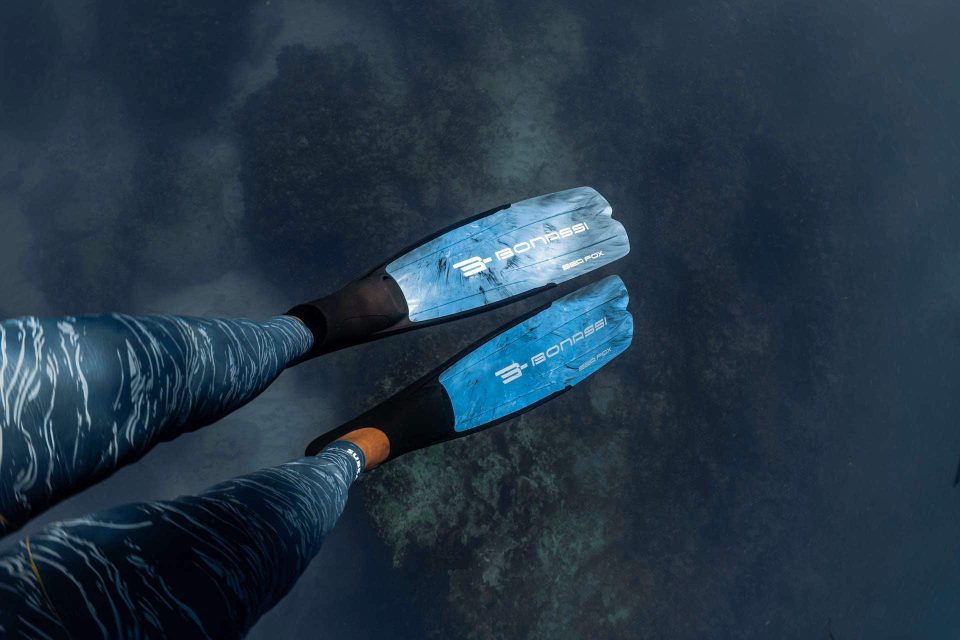
Stiffer fins require more strength and training to be used effectively, however, they increase moveability underwater.
If you own a pair of snorkel fins, or scuba fins, you can start off with those, but as you progress in your training you will eventually upgrade to dedicated freediving fins.
Snorkel
A snorkel is simply a tube with a mouthpiece to let us breathe while our head is underwater. It is connected to our freediving mask to hold it in place and more expensive models offer additional features such as a dry top or being foldable.
There are different kinds of snorkels you can buy, however, in freediving we generally prefer simple, curved designs with a mouthpiece that’s easy on our jaw.
Other helpful equipment for freediving
Besides the essentials like mask, fins, and snorkel, there is other helpful equipment that will make your life as a freediver more fun:
Dive Computer
A freediving computer is a super helpful tool to take out some of the stress of managing your freedives.
Dive computers were originally used for scuba diving, however, most manufacturers have begun incorporating freediving features in their models.
There are also dedicated freediving computers that come at a much lower price tag and will replace your old dive watch.
They usually include a current depth indicator, bottom timer, repetitive dive counter, and surface interval timer.
Premium models also have GPS features, apnea training modes, and come with higher depth limits.
Buoy & Line
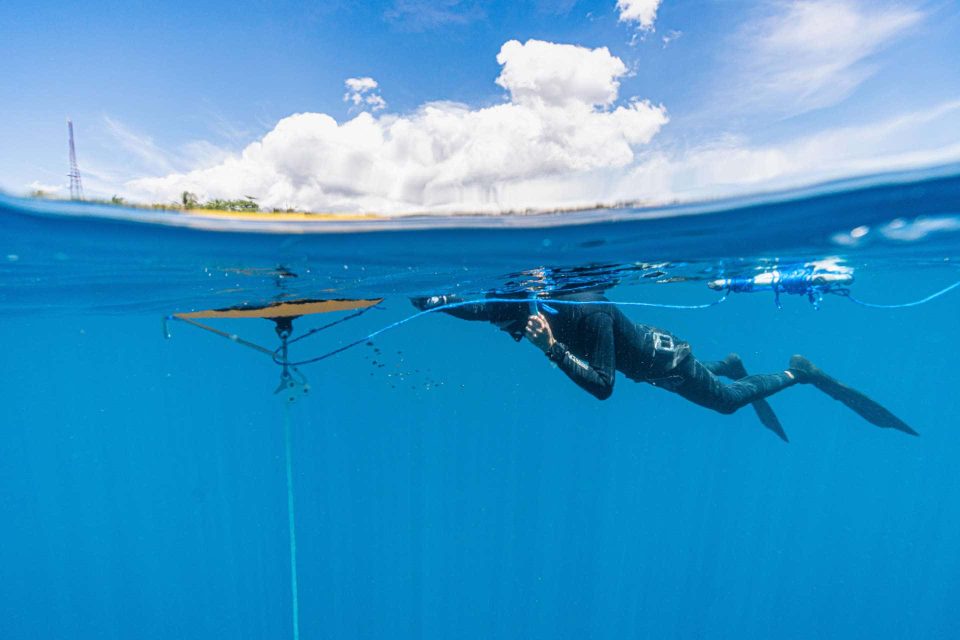
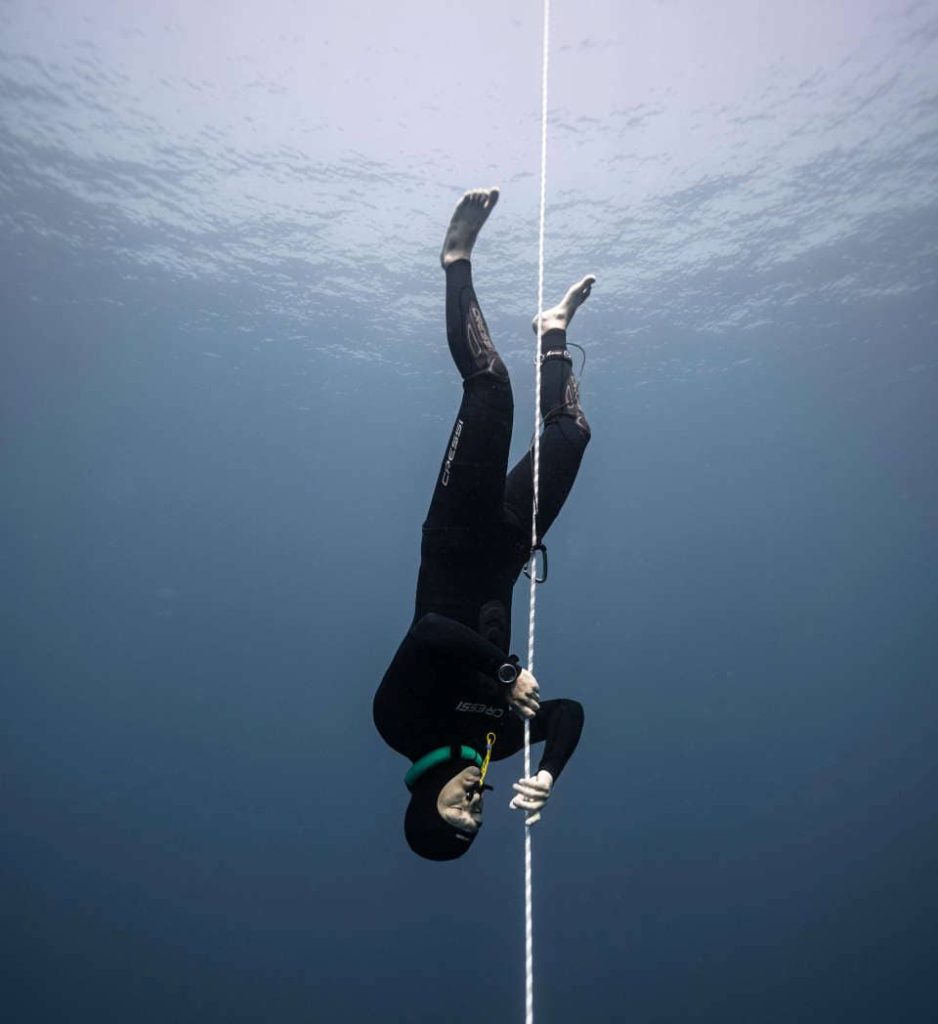
Buoy and line are indispensable tools for freedivers practicing their deep diving and staying safe underwater.
The concept could not be simpler. Set up a floating buoy at the surface and let the line drop to the target depth.
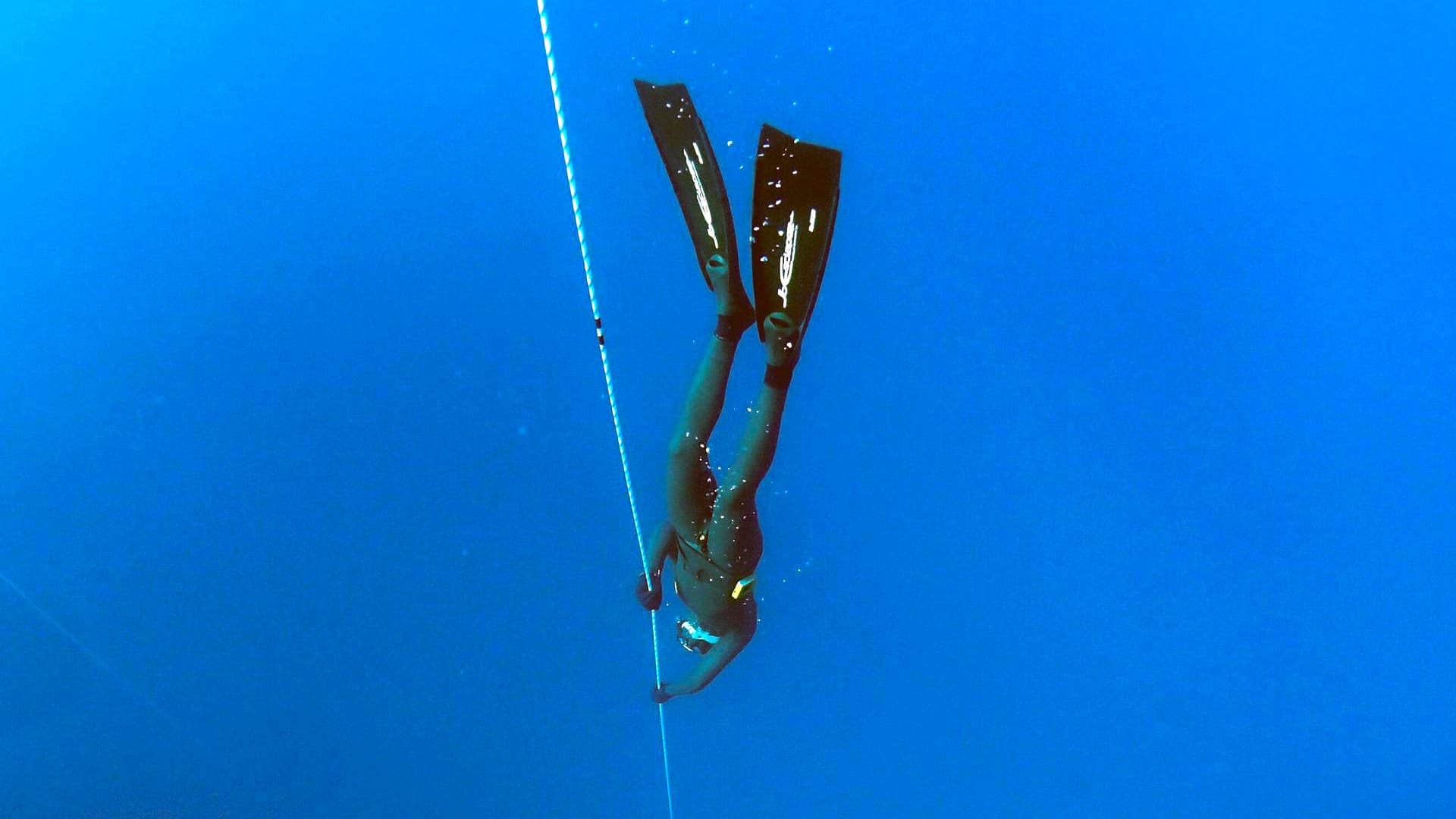
You then dive down the line until the end and can use it as a depth indicator, as well as a visual reference to not get lost.
Wetsuit
If you are lucky enough to live by the sea in a warm place, or only practice in heated pools, you can simply dive in swim trunks and a rash guard.
However, most divers prefer to use at least a thin wetsuit for thermal insulation and additional protection from the environment.
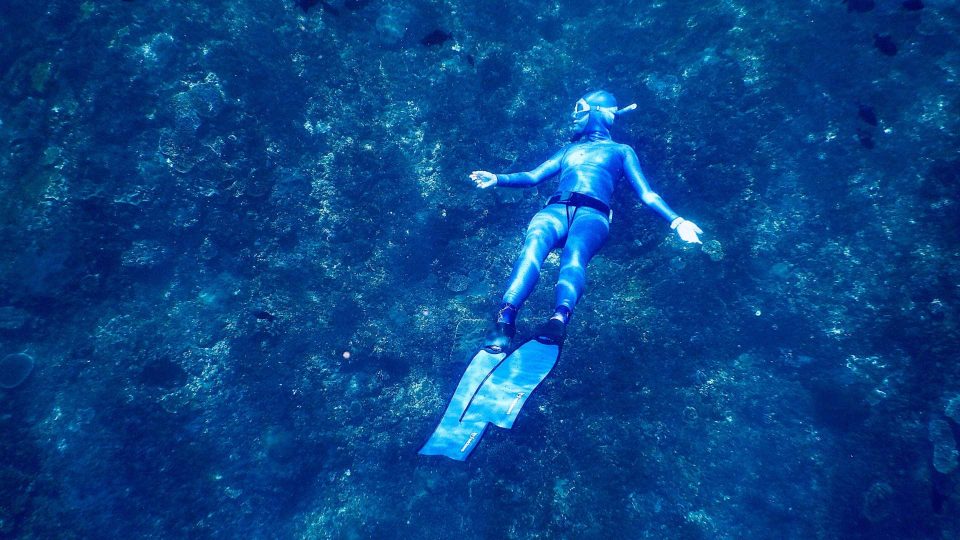
Freediving wetsuits are similar to surfing ones and should provide sufficient warmth without restricting your movements too much.
1-3mm are used most often, however, coldwater diving may require 5mm or even 7mm thick suits.
Remember that you’ll then need to bring a weight belt in order to sink, as well.
How to get started with freediving
There are three ways that most people start out with their sport:
- Do a freediving course
- Join a freediving group/club
- Grab a dive buddy and start freediving on your own
1. Do a freediving course
A freediving course is a great idea to get started under professional supervision. You learn the basics of freediving, breathing exercises, descent strategies, and the risks and dangers involved.
Moreover, you have a professional freediving instructor on your side who will guide you and give you valuable tips and tricks on the side.
The downside is, of course, the cost involved, but it is definitely a good investment into your sport.
2. Join a freediving group/club
There are many freediving clubs and private groups in almost every city and a quick online search will usually yield plenty of results.
Clubs help you find other like-minded freedivers and you will always have someone to go to the lake or beach with you to practice.
Plus, there are many experienced divers around you that can show you some tricks.
The downside is that you never know whether the advice you get is trustworthy and you might not live in a city that has a freediving club nearby.
3. Grab a dive buddy and start freediving on your own
If you know someone who would like to free dive with you, you can just start your journey on your own.
Start out with some basic breath-hold exercises, before moving on to static apnea or diving deeper.
It helps to find a good dive buddy first that you can trust and to check some online tutorials before trying any freediving exercises.
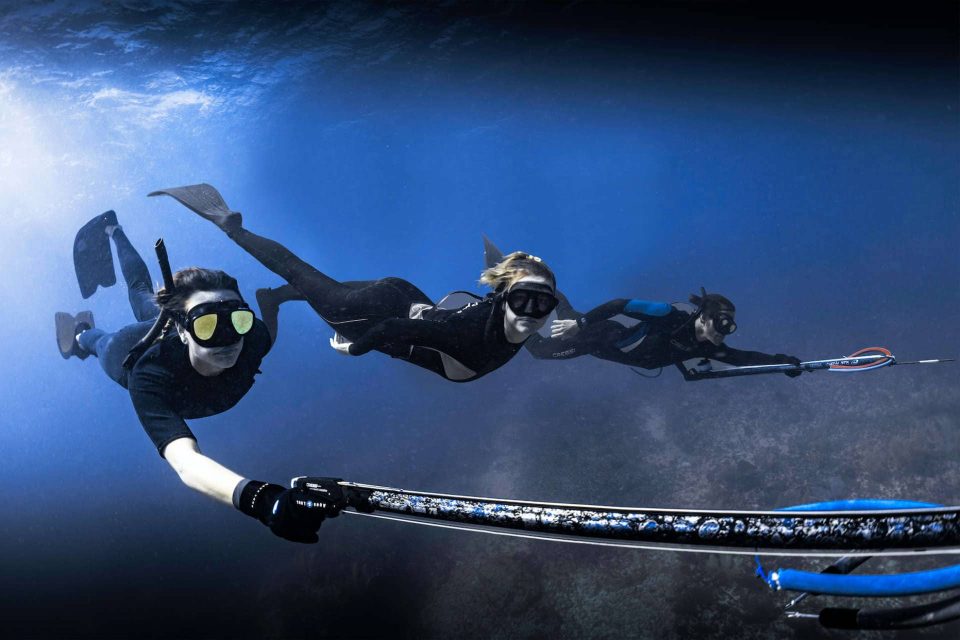
The advantage is that you can start immediately and begin practicing.
The drawbacks are obvious though…no professional supervision and no community that can offer advice.
Freediving Courses & Certifications
There are no certifications required to free dive, however, a freediving course will teach you the basics of safe diving and breathing techniques. The progression of freediving certifications is usually based on the depth you dive to during the course, as well as your static apnea times. For example, the Freediver 1 course might go down to 10m/33ft and 1:30mins static apnea, and the Freediver 2 course to 20m/66ft and 2:30 mins static apnea.
Freediving is not “difficult” and actually quite easy to get started.
However, a course is always a good idea as you will learn safe diving techniques, as well as breathing exercises, and more.
Find a good dive school and check out their curriculum, reputation, and instructors before signing up for a course.
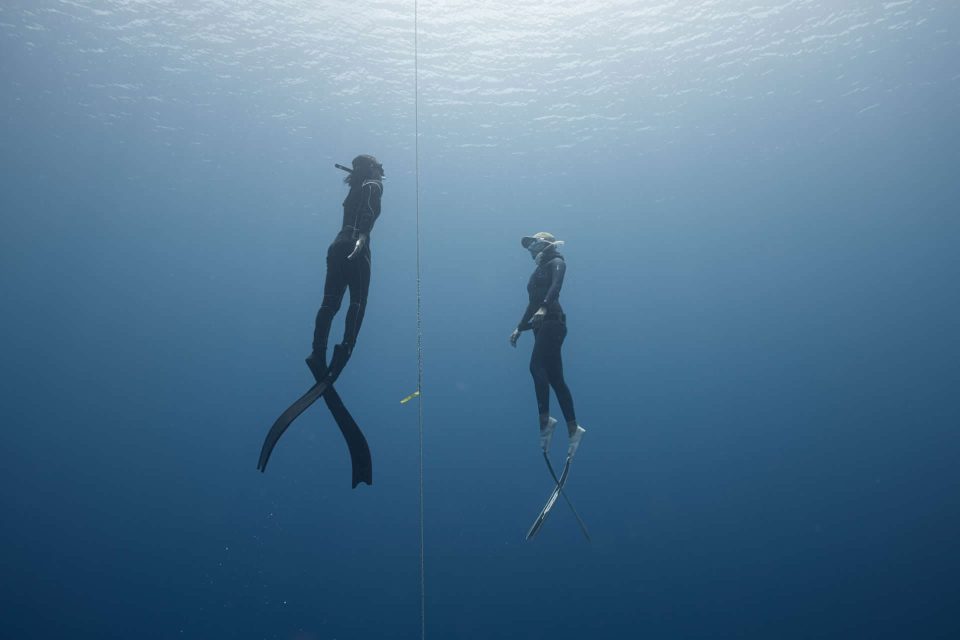
Some basics that you will learn in your introductory freediving course are:
- Basic breathing techniques
- Freediving at depth
- Equalizing while freediving
- Intro to static apnea
- Risks & dangers of freediving
- Yoga & relaxation exercises
- Freediving equipment
The exact specifications and curriculum vary depending on the training agency.
Freediving Federations
This is a list of the most popular and reputable freediving federations and training agencies that you can check out:
AIDA
AIDA (International Association for the Development of Apnea) is one of the oldest freediving federations and was founded in 1992. It’s arguably the most recognized one out there and also the largest organizer of international freediving competitions (the other big one being Guiness).
They set a lot of rules and regulations for competitions, as well as advancing teaching methods and marketing the sport of freediving around the world.
They offer a wide range of courses:
- AIDA 1-4
- Monofin Freediving
- Competition & judge courses
- Freediving Instructor courses
- …
AIDA freediving records are generally regarded as the de-facto standard with the toughest regulations and most prestige.
CMAS
Besides being one of the oldest scuba training organizations, CMAS is also one of the most recognized freediving organizations in the world that regularly hosts freediving competitions.
The courses they offer follow the same star system as their scuba courses:
- 1* Star Free Diver
- 2* Star Free Diver
- 3* Star Free Diver
- Freediving Instructor courses
PADI
PADI is the largest scuba training organization in the world, and they also have a full freediving course program and e-learning section.
The courses they offer are:
- Basic Freediver
- Freediver
- Advanced Freediver
- Master Freediver
- Freediving Instructor courses
Do I have to be a good swimmer to free dive?
You don’t need to be a swimmer at a semi-professional level to start freediving. However, you do need to know how to swim and feel confident and comfortable underwater. In contrast to scuba diving, better swimming skills are required as there is no buoyancy compensator that helps us up to the service, and some strength and endurance in the water are beneficial.
Freediving Competitions & Records
Freediving and apnea is a sport that’s made for athletic competitions and chasing records. Every year, new ones are established in different categories that show the incredible feats our human bodies are capable of achieving with just a single breath.
There are four general categories of freediving competitions:
- No-Limit Freediving Records
- Constant Weight Freediving Records
- Variable weight freediving records
- Free Immersion Freediving Records – diving as deep as possible
- Static Apnea Freediving Records
No-Limit Freediving
The most iconic and famous freediving competitions are the no-limit freediving ones. The concept is simple: Dive as deep as possible by any means necessary.
Divers take sleds down to the target depth before ascending with the help of a lift bag.
People have achieved incredible depths of 200m/650ft+ in this discipline, however, there have been just as many (fatal) accidents.
Constant Weight Freediving
Constant weight freediving requires the freediver to carry a constant amount of weight through the dive. This means no sleds or other helpers are allowed and divers dive down and back up on their own.
Variable Weight Freediving
Freedivers in the variable weight category can use a sled to be pulled down to the target depth before ascending on their own, thereby leading to the “variable weight”.
Free Immersion Freediving
Free immersion means that divers are not allowed to use any helpers and they can only use their fins to descend.
Static Apnea
Static apnea competitions measure the time divers stay underwater on one breath without moving.
Freediving Records
Check out the full list of current freediving records in 2026 to learn more about these competitions and achievements.
All our freediving articles
Here are all our freediving articles, guides, and blog posts:
-
Freediving Records