
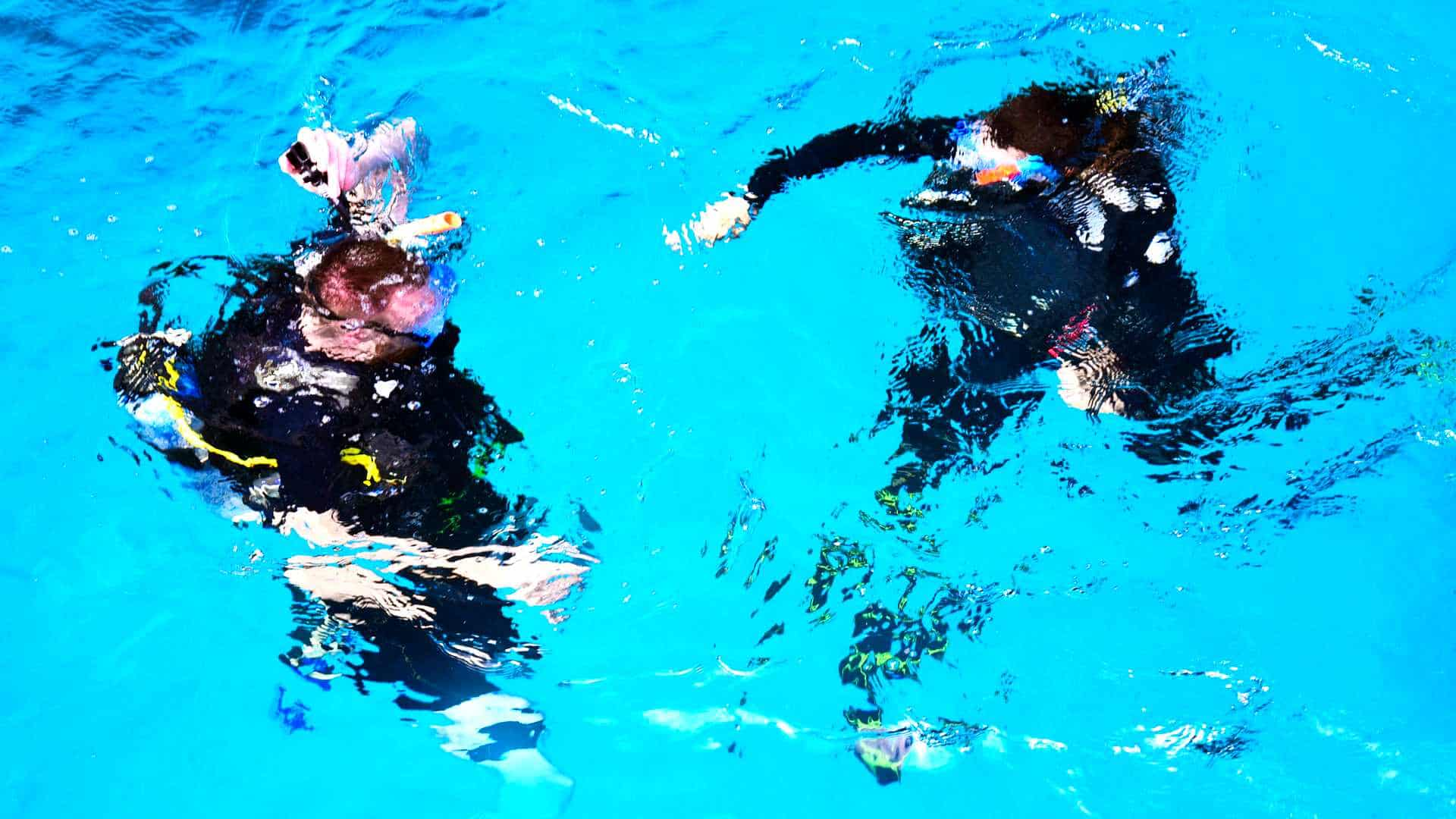
A Discover Scuba Diving course is the perfect way to try out diving, especially for those who are curious about scuba diving but not quite ready to get certified right away!
If you have looked into getting started with scuba diving, you probably found out that one way to try out diving is by taking a so-called Discover Scuba Diving (DSD) or Diving Baptism course. They are fun, inexpensive and the worst that can happen is that it’s not for you.
We’ll look at what you do during the course, the best places to try out diving, the cost involved and how to proceed from there.
Let’s dive right in!
How to try out diving for the first time
A Discover Scuba Diving course allows you to try out diving under the supervision of a professional instructor. You’ll learn some basic skills and rules and get to breath underwater for the first time.
We think a Discover Scuba Diving event – or DSD as we like to say – is the best way to get started with diving. It’s fun, inexpensive, and without any commitments to do a full course afterward.
Best part? Many dive schools will even count the price of the introductory course toward your beginner scuba course – called the Open Water Diver course! Just ask them if this is possible and they will surely be happy to work something out.
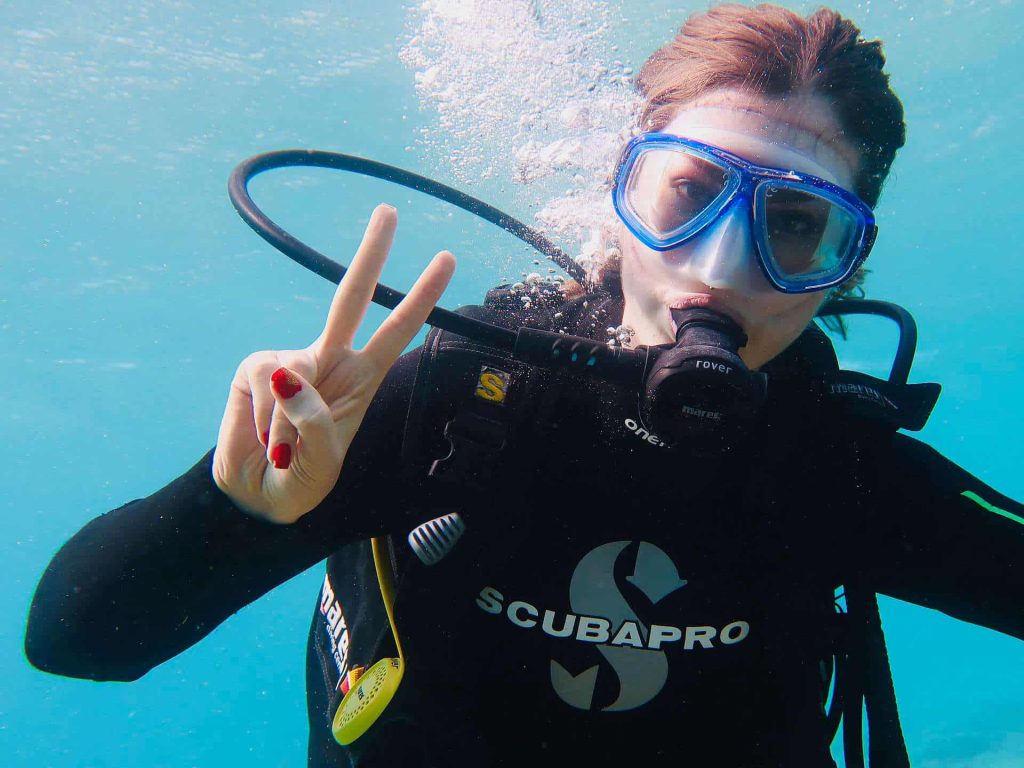
How much does it cost to try out scuba diving?
Most Discover Scuba Diving courses cost anywhere between $50 – $250, depending on the location, but most are priced toward the lower end. Many dive schools will also count the cost of the introductory dive toward your certification.
There are a few factors that can influence the price of the DSD course:
Location
Cheap diving destinations like Thailand offer much lower prices than premier dive spots like the Maldives. On the other hand, there might be more students in your course.
Place
There are options for indoor and outdoor diving, and outdoor is often more expensive. Pool dives are cheaper but might not feel as exciting.
I did my first ever scuba dive in a small lake outside of Cologne, Germany. The rain was pouring down and visibility was awful, but we had a blast!
Number of Dives
Most dive centers offer one introductory dive, however, I’ve seen some that offer packages of 2 or more. I think one is perfect and if you like it so much you want to dive more…just do the full course!
Where to Do Your Discover Scuba Diving Course
You can find Discover Scuba Diving courses at all popular diving destinations around the world. These courses are offered by certified dive shops and resorts, or even freelance dive instructors.
There are three main locations that most people pick for their first ever scuba dive:
- Spontaneously on a vacation after coming by a dive center
- With their friendly local dive shop (FLDS) close to their home
- On a diving trip
Ideally, you should choose a location known for its clear waters and rich marine life, but of course, not all of us live at a diving hotspot. All three approaches are fine, and there is no “best place” for a discover dive.
Just like the question of where to get scuba certified, you should just pick what feels right and is most convenient. At home can be great because you get to meet the local community and do your course before you go on vacation. If you’re already at a great dive site, this is the perfect chance to try something new and try out scuba diving!
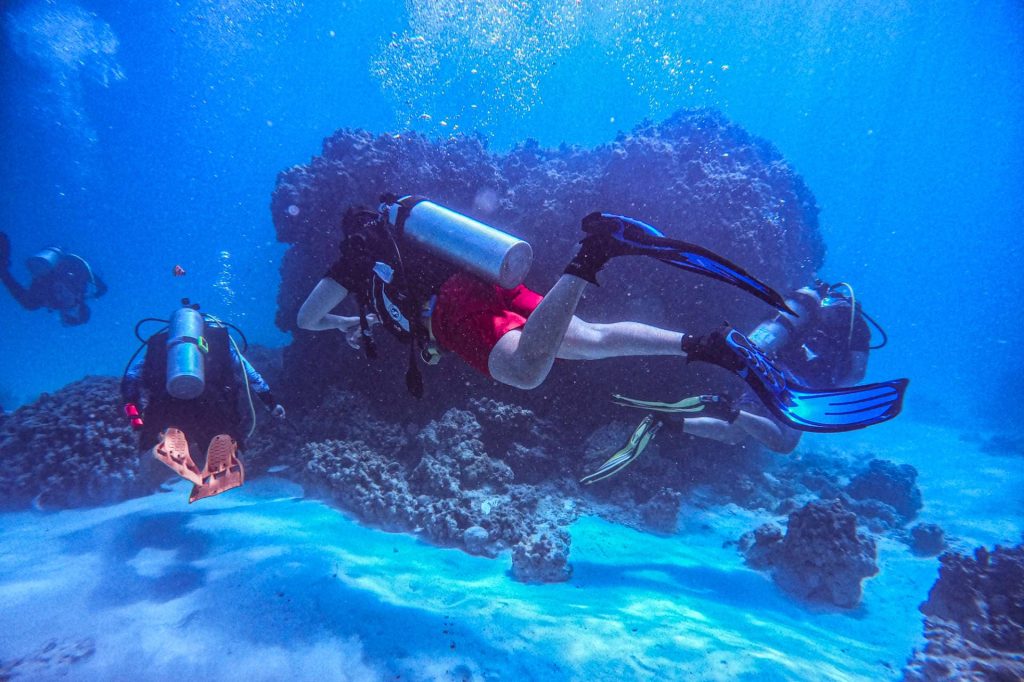
What is part of a Discover Scuba Diving course?
Most discover scuba diving courses I have seen consist of three parts:
- Theory
- Pool Training
- Open Water Dive
Starting with Theory: The course usually begins with a brief theoretical session. This involves learning the basics of scuba diving, some important rules, understanding the equipment, and getting familiar with safety procedures.
If you want to prepare a bit in advance, you can check out our scuba diving glossary to get familiar with common terms.
Pool Training: Before heading into the open water, you’ll sometimes have a separate session in a swimming pool or confined water. This is where you’ll learn to use the scuba gear to breathe and float underwater and practice basic skills like clearing your mask and regulator (the device you breathe from).
Not all dive centers offer separate pool training, however, and instead fo straight into the diving part.
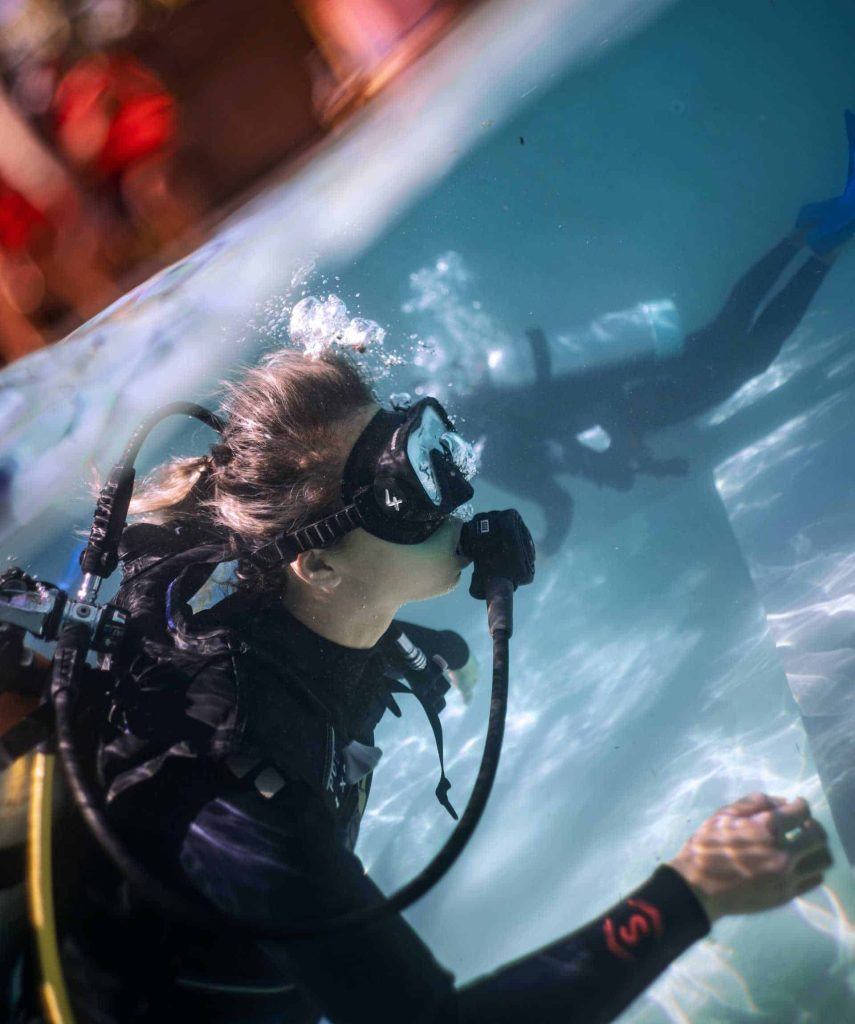
Open Water Dive: The best part is of course the open water dive! Under the supervision of a certified instructor, you’ll dive down to about 3-5, / 10-14ft, in the ocean or a lake. I know some instructors who take their first-time divers down to 12 meters / 40 feet!
Indoor vs Open Water
Many cold water diving places do their Discover Dives completely in a pool. While this might not offer the same exciting marine life as outdoors, at least the water here is usually really warm!
What to Look Out For
When booking a Discover Scuba Diving course, it’s super important to do it with someone you trust and feel comfortable around! There is no objectively “best” instructor”, place, or training agency to dive with. It must feel right for you, no matter what others say.
Nevertheless, here are some tips and hints as to what to look out for before, during, and after your course.
Before diving for the first time
Health and Safety: Ensure you’re in good health before diving. Conditions like asthma or heart issues can be risky in scuba diving. If you do have any conditions that could impact your diving fitness, please talk to your instructor and consult a physician!
Choose a Reputable Dive Center: Look for centers with certified instructors and good safety records.
Certifications and accreditations are always a good sign, as well as reviews on Google Maps, Bing, or other platforms. Of course, take online reviews with a bit of caution. People usually leave a review for a business if they are either extremely happy or extremely unhappy with someone.
Read our tips on how to find a good dive school for more.
Talk to the instructor and dive center personally: I always recommend talking to the operator personally before signing up or diving with them. You can get a better feeling for the person and whether you feel comfortable around them. This is also a perfect time to tell them of any fears or concerns you have, as well as anything else they should know.
Check out my book scuba diving without fear if you have any concerns!
During your dive
Listen to Your Instructor: Always follow the instructions and safety guidelines provided by your instructor. I know this sounds a bit like back in kindergarten, but I always tell my students: “You don’t have to improvise at all today. I’m gonna show you how to do it, and you just do it after me.”
After a while, you’ll be able to float around effortlessly and enjoy your first time underwater! 😊
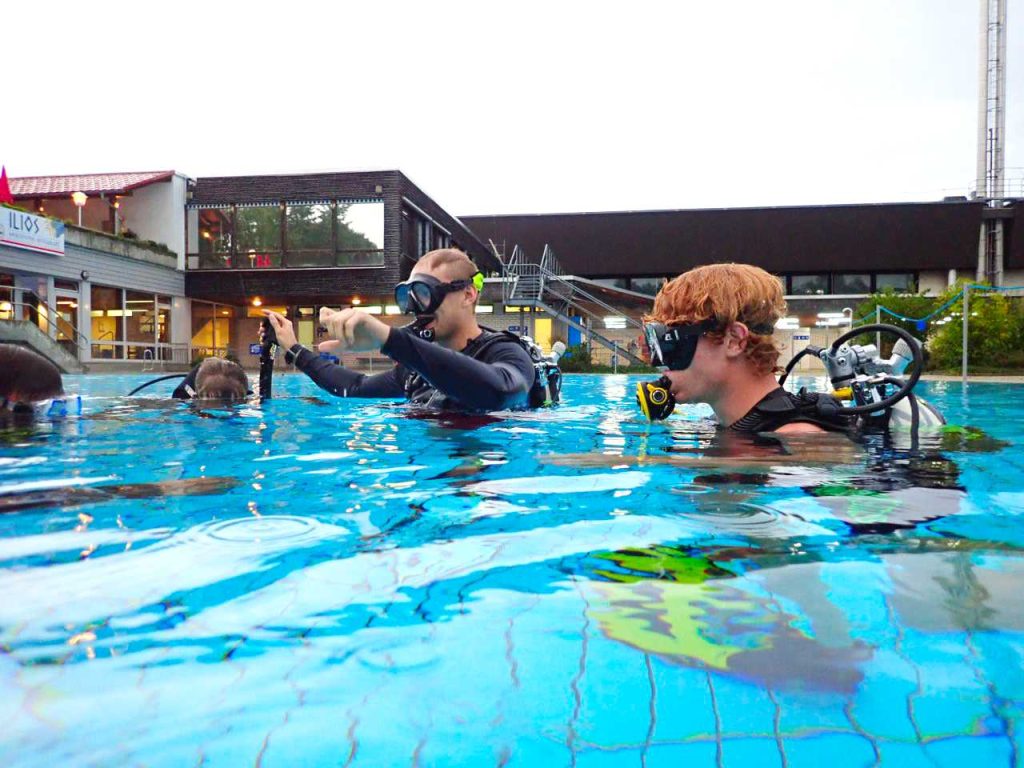
Be Aware of Your Limits: If at any point you feel uncomfortable, signal to your instructor. How? Don’t worry, they will show you before the dive!
There is absolutely no shame if you don’t want to dive deeper, feel cold, or nervous, or your ears don’t feel right. Actually, that’s pretty normal and it’s better to be safe than sorry.
Take some cool photos (optional): We love taking underwater photos and if your dive center offers this option, it’s really worth it! 😊
I think it’s best to let someone else take them (for example your instructor) so you can focus more on diving and not on carrying a camera.
After the dive
Take care of your ears: Ear care for divers is super important! Dry your ears (without a cotton stick though!) and rinse them thoroughly. This is especially important after diving in lakes or the sea, as there can be bacteria in the water that cause inflammation if not washed out.
Get your certificate: One of the proudest moments of my diving life was when I received my certificate from PADI (yup, I did start out as a PADI diver too ✌🏼😄) after my Discover Dive! So, I think you should definitely get your own certificate asap.
Get your diving stamp: It’s customary to sign your logbook entry and get a stamp from the dive center and dive instructor who went with you! We love this tradition and having a cool logbook is really something to be proud of.
Conclusion
Taking a Discover Scuba Diving course is a fantastic way to get a glimpse of the underwater world. It’s a safe and guided experience and perfect for anyone thinking about becoming a scuba diver.