Nitrox diving has become all the rage in recent years among divers.
Whenever divers get to a new dive base or liveaboard, one of the first questions seems to be “do you offer Nitrox here?”.
Let’s see what Nitrox or Enriched Air Nitrox is, why people use it, how to become a Nitrox diver, and whether it deserves to be a must-have certification.
What is Nitrox?
Nitrox, often called Enriched Air Nitrox (EAN), is a breathing gas mixture of nitrogen and oxygen that has a higher percentage of oxygen, typically ranging from 22% to 40%. Scuba divers use it to increase their non-decompression times at the expense of having to stay at lower diving depths.
Nitrox diving has become a very popular choice among divers, no matter their level of experience.
While technically the use of breathing gases other than normal air (78% nitrogen and 21% oxygen content) is considered a form of technical diving, most scuba training agencies don’t count it as such.
Therefore, even freshly certified Open Water Divers can become Nitrox divers and use Enriched Air Nitrox on their dives.
Nevertheless, technical divers still use Nitrox mixtures when diving at lower depth ranges, as well as for decompression purposes.
Benefits of Nitrox Diving
The benefits of nitrox diving are longer bottom times through extended no-decompression, less risk of nitrogen narcosis, and possibly shorter surface intervals and reduced exhaustion from diving.
There are several benefits associated with Nitrox diving.
Longer Bottom Times
Using nitrox can extend your no-decompression limits due to reduced nitrogen intake in comparison to a dive at the same depth using plain air. This is because Nitrox has a lower nitrogen content than air, meaning we don’t take up as much of it in our tissues as we otherwise would.
Again, this is only a benefit if you compare it with a dive at the same depth!
Shorter Surface Intervals
The decreased nitrogen absorption means reduced off-gassing time during your surface interval. While this might be tempting, it is usually better to adhere to the same surface intervals as on air, and instead benefit from less pre-saturated nitrogen loads during your next dive.
Reduced Exhaustion
Many divers report feeling less fatigued after a nitrox dive compared to diving with regular air. The reason for this is arguably the higher oxygen content in Nitrox – ranging from 22-40% – which makes people feel less exhausted.
However, some call this a marketing slogan…
Decompression Gas
Nitrox with higher oxygen contents is a frequently used decompression gas for technical divers who use it to decrease their decompression stop durations at lower depths.
It’s common practice to even use pure oxygen (100% O2) during 3m / 10ft decompression stops.
Leads to better diving etiquette & planning
Let’s face it, many scuba divers are not exactly…masters of their skill. The same holds true for their knowledge of the necessary diving theory.
Taking a Nitrox course helps to review these fundamentals and teaches good dive planning and habits.
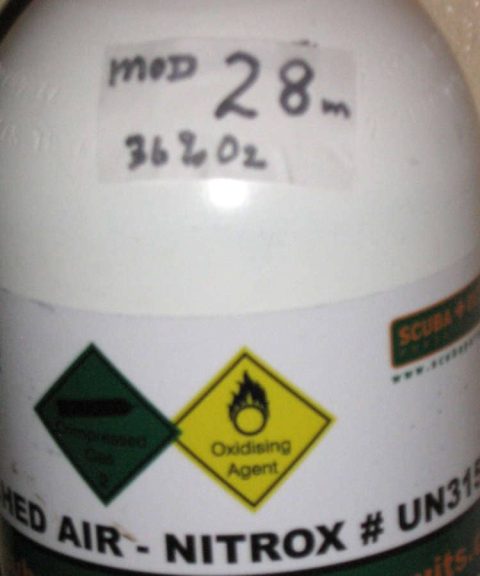
For example, Nitrox divers must always analyze their oxygen content in their tank, determine their maximum operating depth (MOD) and mark it on their tank. This way, divers are more aware of their dive plan and tend to stick to these limits far better than others.
First step into mixed gas diving
For many divers, their Nitrox course is their step into the world of mixed-gas diving. Even if you never plan to become a technical diver, a Nitrox course gives you a nice introduction at managing gases and depth better.
Disadvantages of Nitrox Diving
Using nitrox for diving presents numerous advantages, as mentioned earlier. However, it also comes with some disadvantages and potential risks. Here are the main disadvantages associated with nitrox diving:
Maximum Operating Depth (MOD) Limits
Increasing the oxygen content means that your maximum operating depth – the maximum depth of your dive – is limited.
This is due to oxygen becoming toxic at higher partial pressures, leading to these potential risks:
- Central Nervous System (CNS) Toxicity: Breathing high percentages of oxygen under pressure can lead to CNS oxygen toxicity. This condition can manifest as visual or auditory disturbances, nausea, twitching, and in severe cases, seizures underwater.
- Pulmonary Oxygen Toxicity: Extended exposure to elevated levels of oxygen can harm lung tissues. While this is more of a concern for technical divers doing very long dives or for those using pure oxygen for decompression, it’s still a consideration.
Due to the risk of oxygen toxicity, each nitrox mix has a specific maximum depth, known as the MOD. As the percentage of oxygen in the mix increases, the MOD becomes shallower. This can limit the depths at which divers can safely use specific nitrox blends.
Cost:
Nitrox fills are often more expensive than regular air fills. Over the course of multiple dives, this difference in cost can add up.
Additionally, you might have to invest in extra equipment such as oxygen analyzers or nitrox-compatible dive computers, which adds to the initial cost.
Equipment Considerations
Tanks and equipment used for nitrox should be oxygen cleaned to prevent the risk of fire or explosion, as higher oxygen concentrations make materials more combustible. This is usually the responsibility of the dive center or liveaboard operator.
On the other hand, when diving in Germany and other European countries, you are required to use special Nitrox regulators even at low oxygen levels.
Need for Additional Training:
Taking a Nitrox course requires extra time and money. While it’s not much you should keep that in mind.
Potential for Gas Mixing Errors
There’s a risk that a cylinder might be improperly filled or that the mix might be incorrectly labeled. This can be dangerous if a diver believes they’re using one mix but are actually using another.
Using oxygen analyzers can prevent this.
Scuba Gear for Nitrox Diving
In order to dive using EAN or Nitrox, scuba divers need 3 distinct equipment pieces:
- Nitrox-compatible Dive Computer
- Cylinders with Nitrox Label
- Oxygen Analyzer
Nitrox-compatible Dive Computer
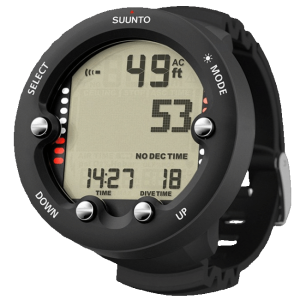
These dive computers are designed to calculate no-decompression limits based on the particular nitrox blend being used.
Honest Opinion
Don’t let raging online reviews fool you here: EVERY dive computer released today has at least basic Nitrox capabilities. The question is therefore not IF the computer is Nitrox-ready but WHAT gas mixtures it supports.
Ideally, your computer lets you adjust the oxygen level for the breathing gas easily. The best ones even allow you to change the breathing gas during a dive, making it possible to use them for decompression diving, as well.
Take a look at our Nitrox dive computer suggestions below!
Suunto Zoop Novo
We earn a commission if you make a purchase, at no additional cost to you.
Shearwater Research Peregrine
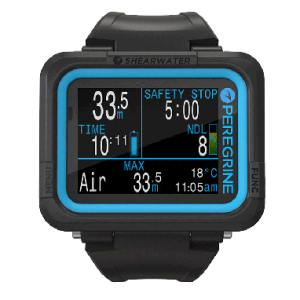
We earn a commission if you make a purchase, at no additional cost to you.
Cylinders with Nitrox Label
Scuba tanks filled with nitrox should be clearly labeled to prevent confusion.
Oxygen Analyzer
An oxygen analyzer is essential for verifying the oxygen content in your tank before every dive.
You’ll learn to use it during your Nitrox course.
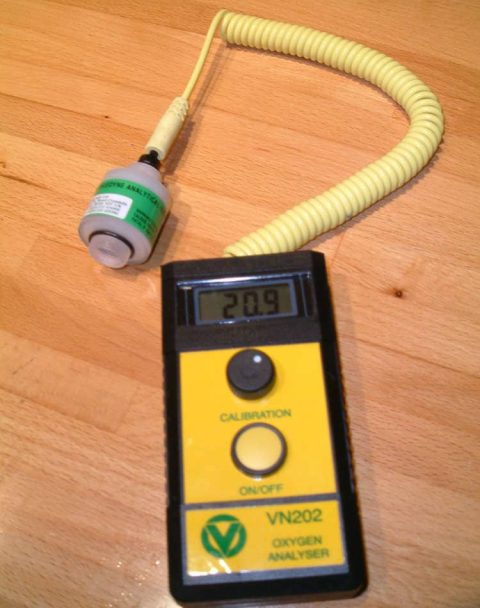
Unless you own a dive center, compressor, or dive on your a lot, you will probably never have to buy one. If you do, this one is affordable and simple to use:


- Small & compact
- Very easy to use
- Fast results
- Fool-proof display
- Up to 100% O2
- Pricey
- Only supports direct input from tank valve
We earn a commission if you make a purchase, at no additional cost to you.
How to get Nitrox certified?
Nitrox diving, just like any other mixed gas usage, requires a certification.
Many dive agencies like PADI, NAUI, and SSI offer nitrox courses and they usually only consist of a theory session and an exam.
There are two levels of Nitrox certifications:
- Enriched Air Diver Certification: Teaches divers the basics of using nitrox mixes up to 40% oxygen.
- Advanced Nitrox Certification: Covers more technical aspects and using mixes with even higher oxygen percentages of up to 100%.
Safety in Nitrox Diving
In order to dive safely with Nitrox, you should follow these safety tips:
- Always analyze the gas mix in your tank before diving.
- Plan your dive based on the actual oxygen percentage.
- Stay within the MOD for your nitrox blend.
- Never exceed the depth recommendations for your specific mix.
- Use scuba gear that’s certified for Nitrox diving like regulators and tanks
- Use a Nitrox-ready dive computer
- Set your dive computer to the correct oxygen level before the dive