
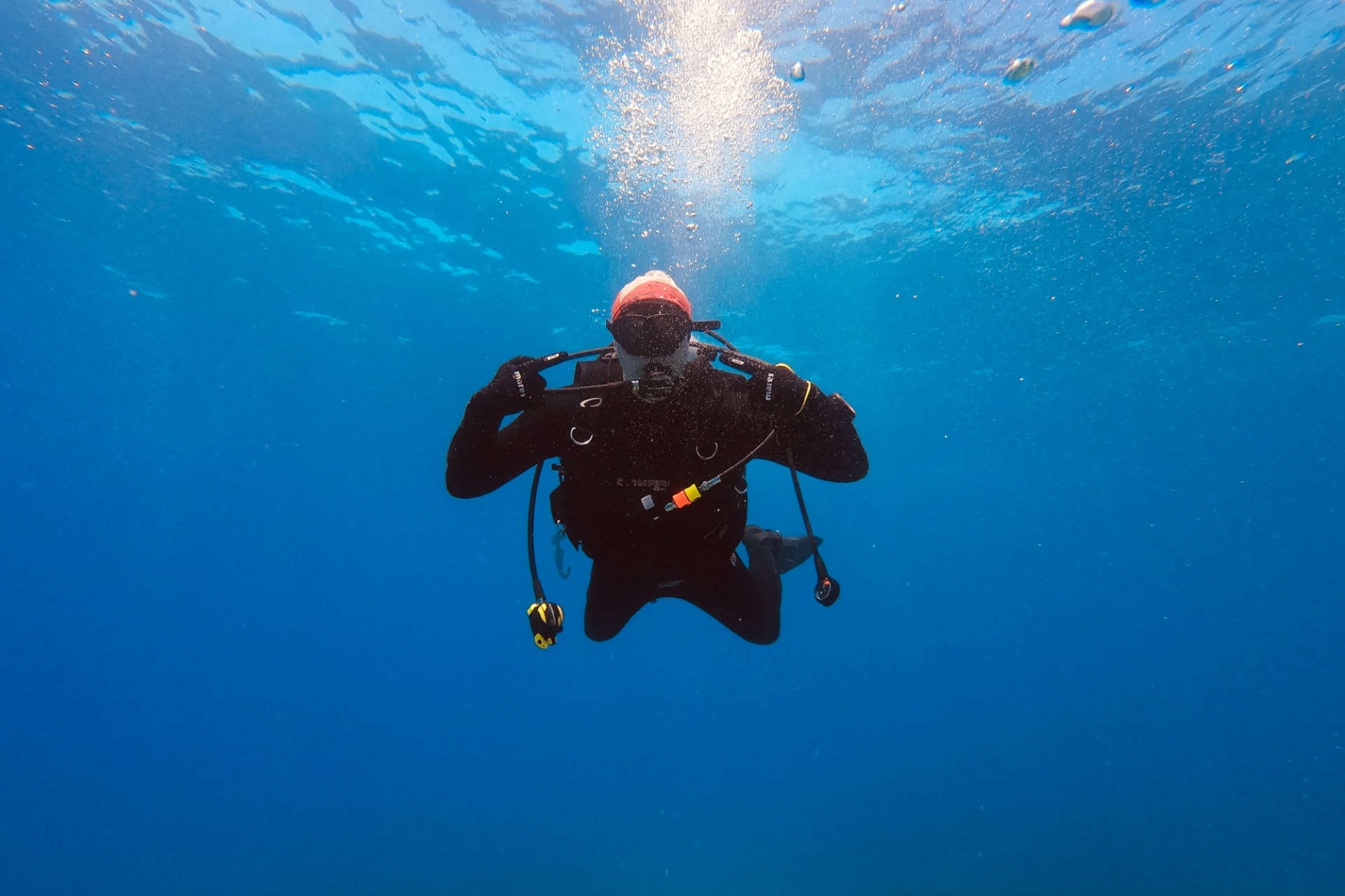
Most divers who travel abroad are accompanied on their dives by a local dive guide.
Unless you know a reef well or know how to read a dive site map correctly, this is the safest way to explore a diving destination.
A good dive guide will make a dive safe, a great one will make it an incredible experience…a bad one, however, can ruin it pretty quickly.
Here are some tips on finding a good dive guide, what makes them stand out, and what to do if that’s not the case.
If you are a dive professional, you might also find a thing or two you could improve about your own way of guiding dives.
How a good dive guide should be
A good dive guide should create a safe and relaxed atmosphere so that everyone can enjoy the diving experience without fear or stress. They should have a good knowledge of the dive site, follow safe diving practices, regularly check everyone’s air, and help out when problems arise.
A good dive guide is super important, especially for beginner divers with little experience.
After all, some might just be out of their Open Water Diver course and it could be their first experience diving on their own.
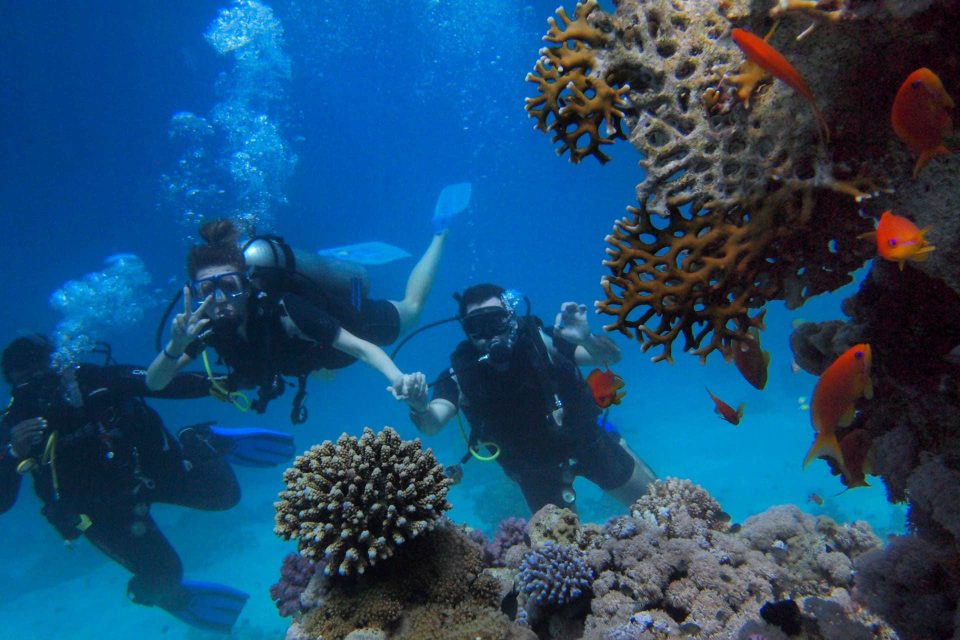
Let’s look at some of the things a dive guide should be or do to make them stand out from the rest. Here is a comparison of what I think differentiates great ones from good and bad ones.
| Bad | Good | Great | |
|---|---|---|---|
| Pre-Dive Briefing | None or rushed | Dive time, depth, group, landmarks, potential dangers | Dive time depth group landmark potential dangers signals NDL warnings 1. aid options emergency procedures |
| Checks Air | Never | 1-2 times | Regularly |
| Dive Site Knowledge | Familiar with the place | Knows the place and important landmarks | Knows the place, important landmarks, potential fish sightings, can find specific animals, and takes time to show them |
| Safe Diving Practices | Disregards safety for speed or excitement | Generally follows safe diving practices | Follows safe diving practices and enforces them among other divers |
| Diving Depth | Stays very shallow or goes beyond depth limits | Sticks to recreational diving depth limits | Able to adjust the diving depth to the group dynamics and certification level |
| Language skills | Speaks own language and broken English | Speaks own language + English well | Speaks several languages well |
| General behavior | Disinterested or stressed | Pays attention to group and divers | Shows empathy and makes everyone feel good |
Dive Guide Responsibilities
Let’s look at a dive guide’s responsibilities when diving with others:
- Dive site scouting
- Pre-Dive Briefing
- Guiding underwater
- Decompression procedures
- Emergency help
- Safe water exit
Please note that dive guide may refer to a professional dive guide at a dive resort or dive boat, or to the leader of a dive group.
In the case of professionals, they usually have even more responsibilities like managing guests and sign-ups, handing out rental gear, or
Dive site scouting
The dive guide must select an appropriate dive site and scout it before starting the dive. This includes understanding the flow of the current, entry and exit options, as well as having good knowledge of the surroundings.
Pre-Dive Briefing
The pre-dive briefing is important before starting any dive. A thorough briefing includes info on the dive, procedures, and answers to questions the other divers might have.
Guiding underwater
Of course, the dive guide’s primary task is to guide the group safely underwater.
However, this also includes checking the pressure and non-decompression limits of each diver, keeping the group together, pointing out interesting animals and landmarks, as well as enforcing good diving etiquette.
Decompression procedures
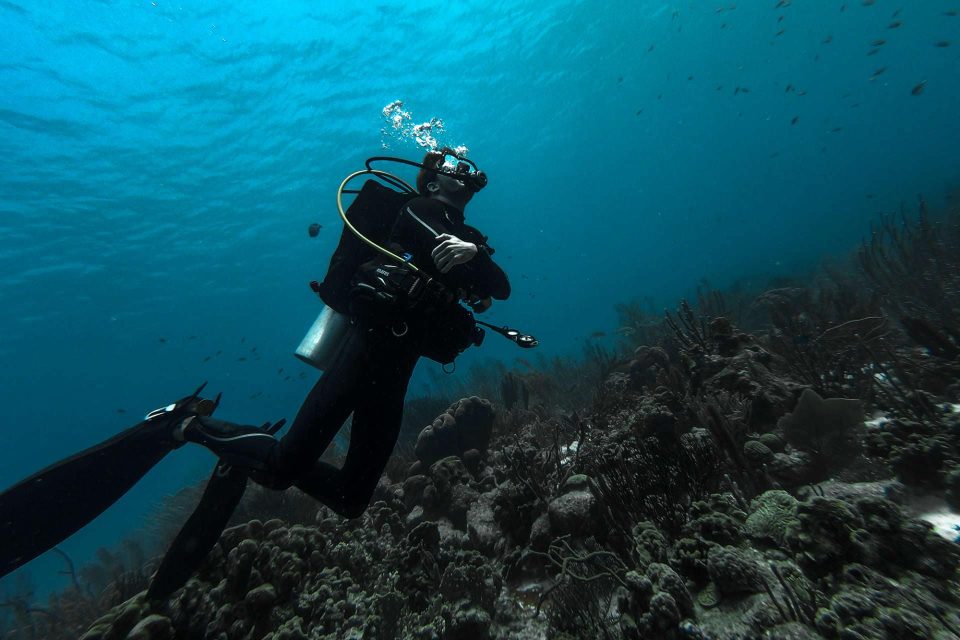
During the final phase of a dive, we ascend to the surface following appropriate rates and decompression obligations.
Here, the dive guide must be monitoring the rest of the divers in the group and make sure all safety stops and penalties on each dive computer are cleared.
Emergency help
Though a dreaded topic, accidents happen and in that case, the dive guide must be able to support the diver.
This includes emergency procedures both under and above water, and potentially starting the rescue chain.
Safe water exit
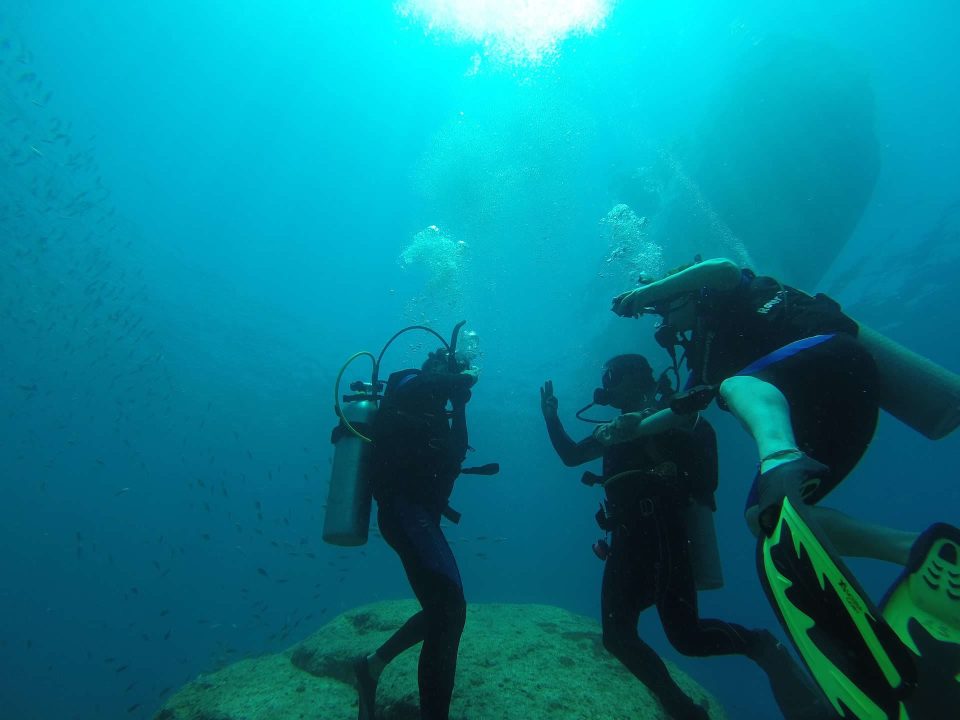
Safe water exits start during the final part of the dive.
The dive guide should deploy a surface marker buoy, and return to the designated exit location.
As a general rule, the dive guide supports divers who need it, however, is the last one out of the water.
What to do if you encounter a bad dive guide
If you come across a dive guide displaying poor behavior, or unsafe diving practices, the first step is to let them know of your feeling and discomfort. This often fixes issues before they arise. If this does not help, contact the operator or dive base owner and request a change to a different dive group.
As always, communication is key and if you are unhappy with your dive guide, just tell them.
Yes, some people might feel this is rude, however, it’s the fastest way to get a response.
In many cases, they might not even be aware of your discomfort.
Of course, there are those that will not listen or change up things, and in that case, it’s best to change the dive guide altogether.
Most dive bases and boat operators on liveaboard cruises have multiple guides available and it should be easy to join a different group.
Remember:
You don’t have to dive with anyone you feel uncomfortable with.
This goes for both other divers, as well as guides and instructors.
Whatever you do, if you feel discomfort act before the dive before accidents happen!
You can check out this tragic accident during a scuba diving course if you want to see an extreme example.
Conclusion
Being a dive guide is a difficult, yet rewarding experience.
Whether you are a professional dive guide, diving with friends, or had an encounter with a particularly good or bad guide yourself, I hope this article gave you a little insight.
What were your best and worst examples of dive guides you encountered so far?
Join the email list to get regular diving tips, tricks, insights, and news straight to your inbox!
Always dive with friends and happy bubbles. 😃
Cheers
Julius